
Kursk, 1943: The Historical Backdrop of The Blond Wolf
Great
historical fiction works because the real events behind it are rich enough to
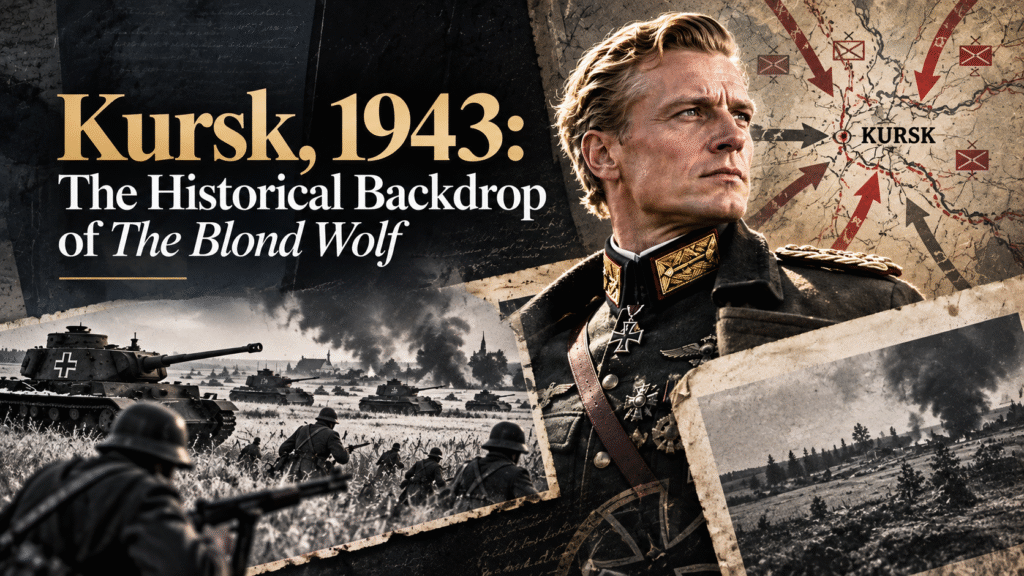
carry a story. The Blond Wolf unfolds in 1943, when Germany’s war in the
East reached a turning point, and much of its early action takes place around
the Kursk salient.
Operation
Citadel, the German offensive at Kursk, began on July 5, 1943. By then, months
of delay had given the Red Army time to prepare. Soviet forces had reinforced
the salient with defensive belts, minefields, pre-sighted artillery and large
reserves. The German attack made significant penetrations in the south but
never achieved the decisive breakthrough its planners wanted. On July 12, the
Soviets launched a counteroffensive against the Orel salient, and Citadel was
abandoned. The campaign, as the book’s final pages remind readers, marked a
decisive shift in the strategic balance, with the Red Army holding the
initiative from the summer of 1943 onward.
Hauss brings
that history to life through General Hesch’s eyes. In the opening chapter,
Hesch flies low over the steppe and photographs line after line of Soviet
trenches and anti-tank ditches, realizing the enemy is far better prepared than
German commanders imagined. It is a vivid way to show readers why the offensive
was so risky before the battle even begins.
The novel
closes with a Historical Context section that separates fact from fiction. It
includes a note on Operation Foxley, a real British plan from 1944 to
assassinate Hitler that was never attempted, and the author is clear that the
British involvement in Hesch’s conspiracy is fictional.
That openness
is part of the book’s appeal. Readers get the drama of a conspiracy thriller
alongside a clear guide to what really happened. For anyone curious about the
Eastern Front, The Blond Wolf is an engaging way to step inside the
history.